
 Save
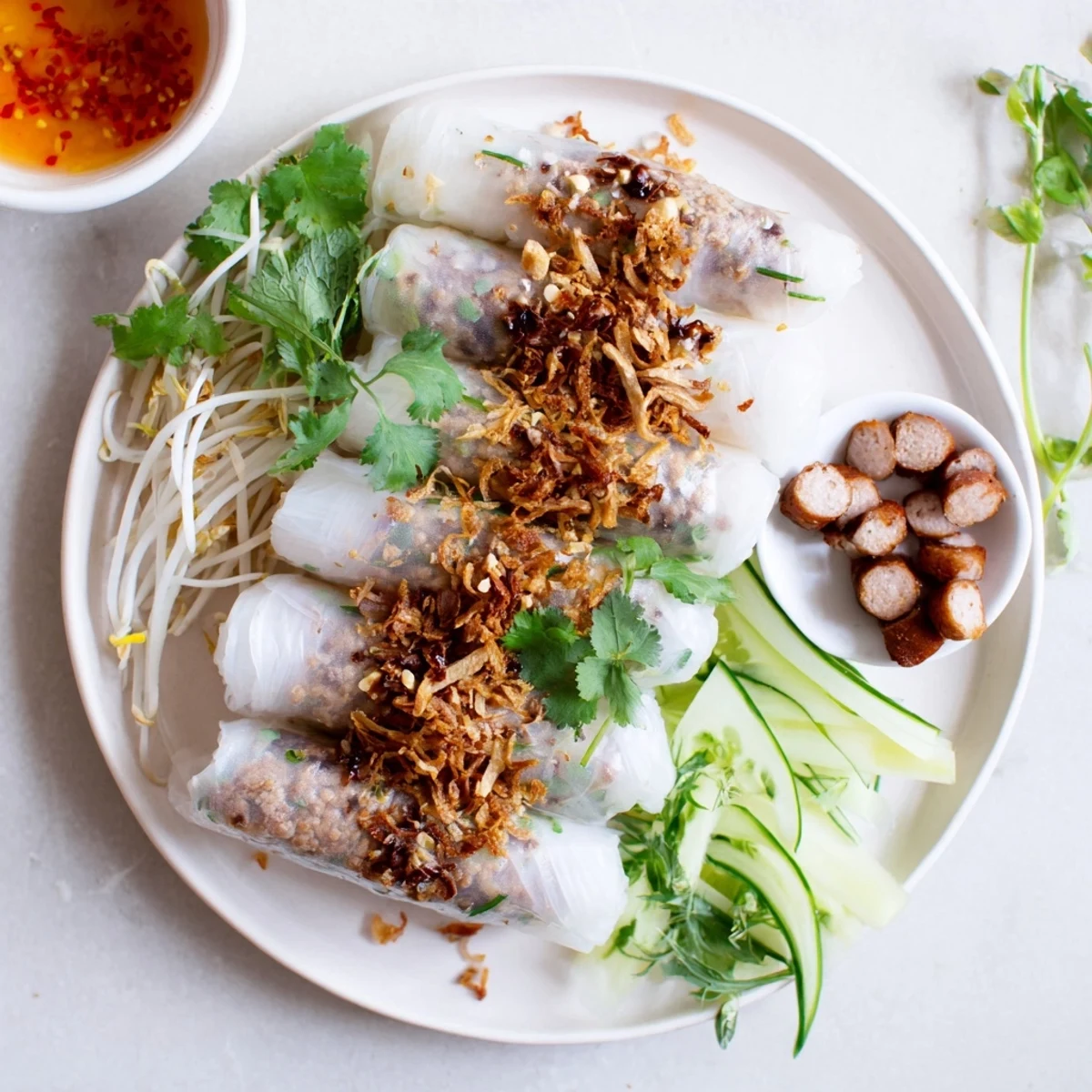
Save Master the art of creating these translucent, delicate rice sheets from scratch. The process involves whisking a smooth batter from rice flour, tapioca, and cornstarch, then steaming thin layers until just set. Each roll gets filled with aromatic ground pork, wood ear mushrooms, and shallots.
The magic lies in the technique—getting that perfect thin, silky consistency requires patience and practice. Serve topped with crispy fried shallots, fresh cilantro, bean sprouts, and cucumbers. The accompanying nuoc cham dipping sauce balances everything with its sweet, sour, and savory notes.
Best enjoyed immediately while the rolls are warm and tender, these make an impressive Vietnamese breakfast or light meal.
The first time I watched my aunt make banh cuon, I couldn't believe my eyes. She moved with such practiced grace, spreading paper-thin rice batter over a steaming cloth like she was painting silk. The kitchen filled with this incredible aroma of shallots frying and pork sizzling, and I remember thinking how something so delicate could feel so comforting. It took me three attempts to get the rice wrapper thin enough without tearing, but now it's become my weekend meditation.
Last Lunar New Year, I made these for my extended family and my usually skeptical uncle went back for fourths. There's something magical about setting out platters of these translucent rolls, glistening from steam, and watching everyone gather round with anticipation. The kitchen gets steamy and chaotic in the best way, with someone always sneaking a hot roll before they've even made it to the serving platter.
Ingredients
- Rice flour: This forms the delicate base of our rolls, creating that signature silky texture that practically melts in your mouth
- Tapioca starch: The secret ingredient that gives each roll its beautiful stretch and prevents cracking during rolling
- Cornstarch: Helps stabilize the batter so your rice sheets turn out smooth and evenly thin every time
- Ground pork: Provides the savory heart of each roll, though I've used chicken and even crumbled tofu successfully
- Wood ear mushrooms: These add the most incredible crunch and earthy flavor that perfectly complements the soft rice wrapper
- Fried shallots: Don't skip these, they're the crispy golden crown that makes each bite absolutely sing
- Fresh cilantro: Bright herbal notes cut through the rich filling and bring everything to life
- Fish sauce: Essential for authentic Vietnamese flavor, but adjust the amount to your taste preference
Instructions
- Whisk together your rice batter:
- Combine rice flour, tapioca starch, cornstarch, salt, water, and vegetable oil until completely smooth, then let it rest at least 20 minutes so the starches can fully hydrate
- Cook the savory filling:
- Sauté onions and garlic until fragrant, then brown the ground pork before adding chopped wood ear mushrooms, fish sauce, and pepper until everything's cooked through and aromatic
- Mix up the dipping sauce:
- Stir together fish sauce, lime juice, sugar, and warm water until the sugar dissolves completely, then add minced garlic and sliced chili for that perfect balance of salty, sweet, and bright
- Steam the delicate rice sheets:
- Bring water to a boil in your steamer, then ladle a thin layer of batter onto the surface and swirl to coat evenly, covering and steaming just 1 to 2 minutes until the sheet sets and turns slightly translucent
- Roll everything together:
- Gently lift each cooked sheet onto an oiled plate using a thin spatula, add a spoonful of filling along one edge, and roll tightly before repeating with the remaining batter and filling
- Garnish and serve immediately:
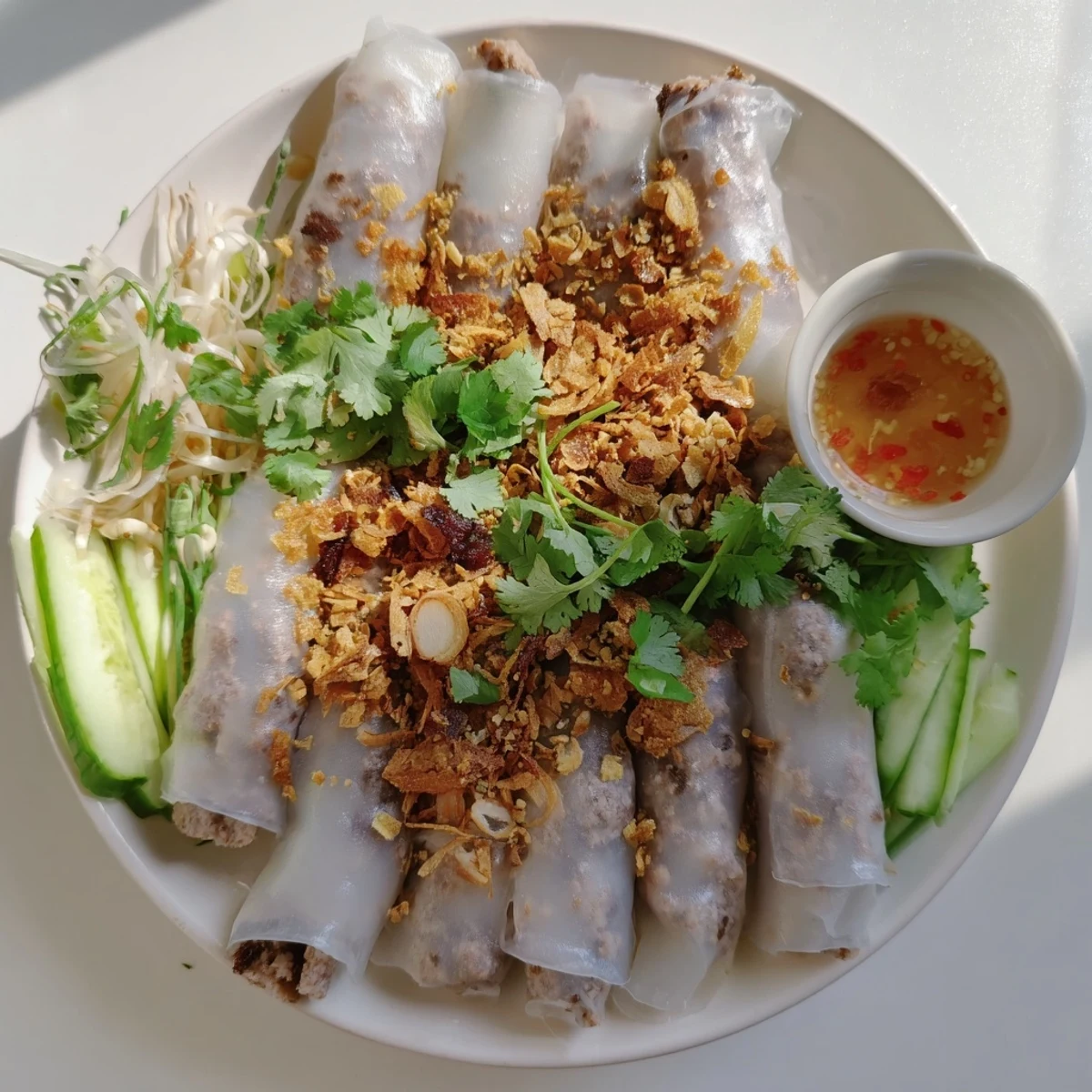
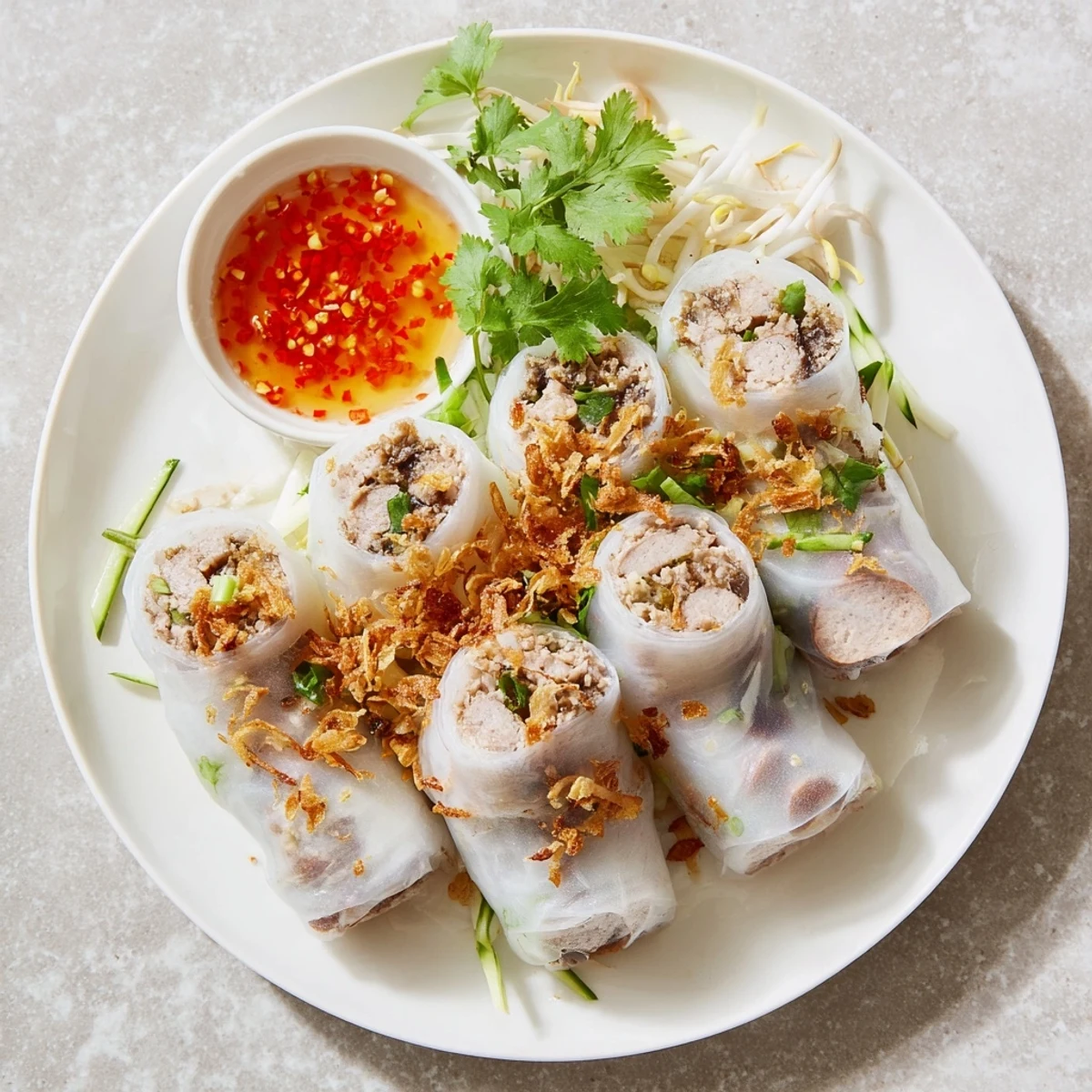
- Arrange your beautiful rolls on a platter, then generously top with fried shallots, fresh cilantro, bean sprouts, cucumber slices, and Vietnamese pork sausage if you're using it, with that fabulous dipping sauce on the side
 Save
Save These rolls have become my go-to comfort food, especially on rainy Sunday mornings when I have time to linger in the kitchen. Something about the rhythm of steaming and rolling, the steam fogging up my glasses, the smell of shallots and cilantro filling the whole house, it just feels like home.
Getting The Perfect Thin Wrapper
The trickiest part of banh cuon is getting that paper-thin wrapper without tearing it. I've found that using a nonstick silicone mat or a tightly woven cotton cloth stretched over your steamer makes all the difference. The batter should spread easily, and if it's too thick, just add a tablespoon of water at a time until it flows like heavy cream.
Making It Ahead
You can prepare the filling and sauce up to two days in advance, which makes the actual cooking process feel much more manageable. The rice batter is best made fresh though, as it settles and separates over time. If you must make it ahead, give it a vigorous whisk before using.
Serving Suggestions And Variations
While traditional banh cuon is perfect as is, I love setting out a little assembly station and letting everyone customize their own rolls. Some friends add extra herbs, others load up on the pickled vegetables, and my daughter somehow manages to fit an impossible amount of filling into each delicate wrapper.
- Try adding slicedVietnamese ham or steamed shrimp for a different protein option
- Pickled carrots and daikon add a wonderful bright crunch that cuts through the richness
- Extra fried shallots on top are never a mistake, they add irresistible crispy texture
 Save
Save There's something deeply satisfying about making these rolls, about the way simple ingredients transform into something so ethereal and delicious. I hope they bring as much joy to your table as they've brought to mine.
Common Questions
- → What is the secret to making smooth, translucent rice sheets?
-
The key is achieving the right batter consistency—thin like crepe batter. Let it rest for 20 minutes to prevent lumps. Steam over high heat and work quickly once the sheet sets to maintain that delicate, silky texture.
- → Can I make Banh Cuon without a traditional steamer?
-
Yes! Use a nonstick pan with a lid. Heat the pan, pour a thin layer of batter, cover immediately, and steam for 1-2 minutes. The result is slightly different but still delicious.
- → How do I store leftover Banh Cuon?
-
Best enjoyed fresh, but leftovers can be refrigerated in an airtight container for up to 2 days. Reheat gently by steaming for 1-2 minutes to restore softness. The texture will be slightly less delicate than freshly made.
- → What can I substitute for wood ear mushrooms?
-
Shiitake mushrooms work well as a substitute, providing a similar chewy texture and earthy flavor. Fresh button mushrooms can also be used, though they'll be softer and less crunchy.
- → Is Banh Cuon gluten-free?
-
Naturally gluten-free when prepared with traditional rice flour. Ensure your fish sauce is certified gluten-free, and check processed meats like cha lua for hidden gluten ingredients. The batter itself contains no wheat.
- → Why did my rice sheets turn out thick and opaque?
-
Your batter might be too thick. Add water 1 tablespoon at a time until it reaches a thin, pourable consistency. Also, avoid using too much batter per sheet—thin layers create that signature translucent appearance.