
 Save
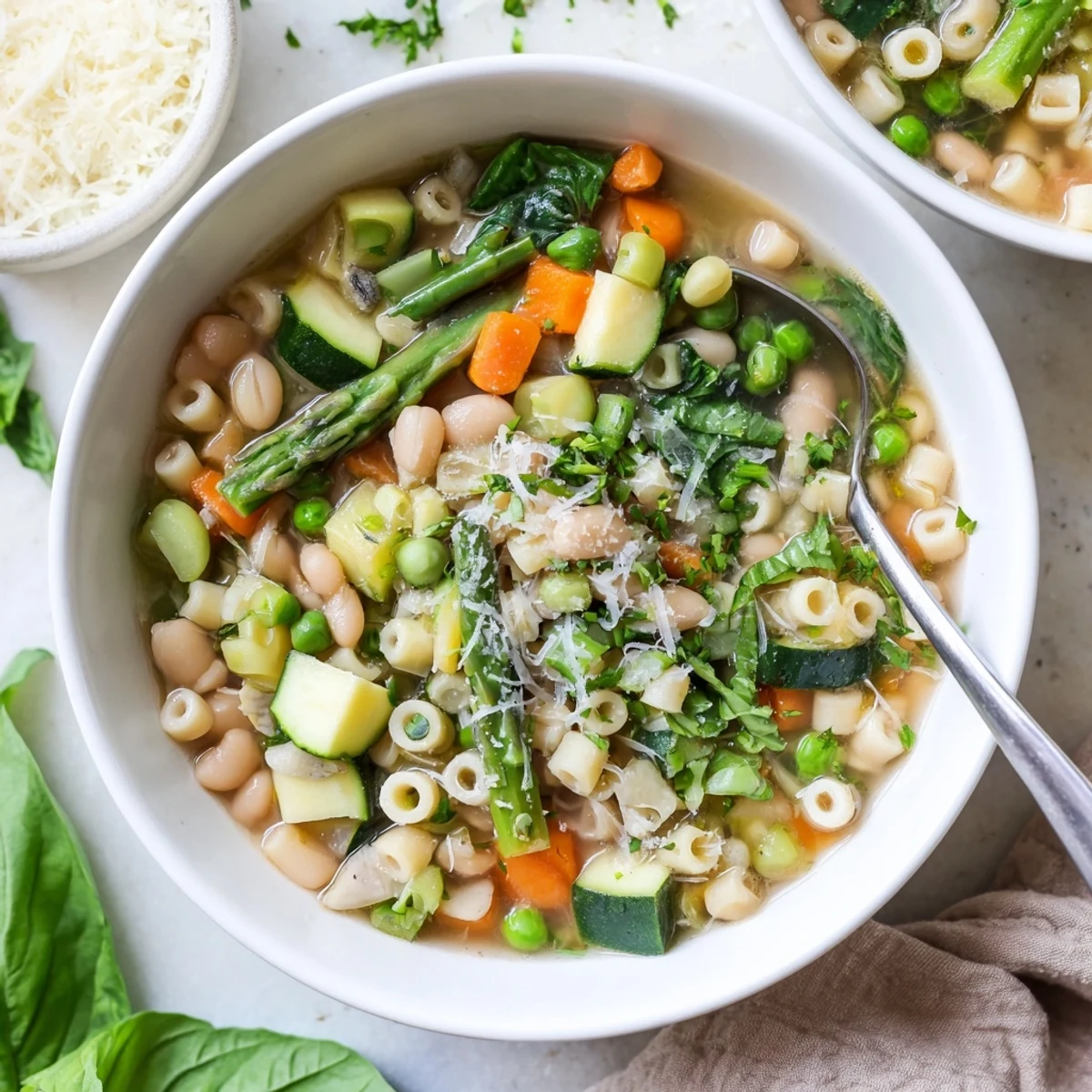
Save This spring minestrone brings together the best of the season in one pot. Asparagus, zucchini, and peas simmer alongside cannellini beans and ditalini pasta in a fragrant vegetable broth. Fresh basil, parsley, and a squeeze of lemon brighten every bowl. Ready in under 45 minutes, it works beautifully as a standalone meal or paired with crusty bread and a glass of Pinot Grigio.
My farmers market haul got away from me one Saturday morning and I came home with way more spring vegetables than two people could reasonably eat. That accidental abundance turned into the best minestrone I have ever made, the kind where you keep lifting the lid just to breathe it in.
I brought a pot of this to a friend's porch dinner last April and her usually picky six year old asked for thirds. The lemon juice at the end is what does it, brightening every single vegetable without making it taste like a health cleanse.
Ingredients
- Olive oil: A good extra virgin matters here since the fat carries the base flavor of every vegetable that follows
- Onion: Finely chopped so it melts into the broth instead of leaving chunky bites behind
- Garlic: Minced fresh, never jarred, because the difference in aroma is impossible to ignore
- Carrots: Diced small so they cook at the same rate as the softer spring vegetables
- Asparagus: Cut into one inch pieces and added later to keep that snappy tender quality
- Zucchini: Diced to match the carrots for even cooking and a pretty bowl
- Peas: Fresh shelled if you can find them but frozen work perfectly fine in a pinch
- Baby spinach: Added at the very end so it barely wilts and stays vibrant green
- Vegetable broth: Use a low sodium version so you control the salt completely
- Cannellini beans: Drained and rinsed well to keep the broth clear and clean tasting
- Small pasta: Ditalini or orzo, anything tiny that fits on a spoon with the vegetables
- Salt and pepper: Season in layers, not all at once at the end
- Fresh basil and parsley: Chopped right before adding so their oils stay intact
- Fresh lemon juice: The secret weapon that makes every vegetable taste more like itself
- Parmigiano Reggiano: Optional but honestly the salty umami on top is worth it
Instructions
- Build the base:
- Heat olive oil in a large pot over medium heat and add the chopped onion. Cook for about three minutes until it goes soft and translucent, stirring so it does not catch any color.
- Add aromatics and carrots:
- Drop in the minced garlic and diced carrots, stirring for two to three minutes until the kitchen starts smelling like something good is about to happen.
- Bring in the spring vegetables:
- Stir in the asparagus, zucchini, and peas. Let them cook for two minutes, just enough to wake up their flavors without softening them too early.
- Simmer with broth, beans, and pasta:
- Pour in the vegetable broth and bring it to a boil. Add the cannellini beans and pasta, then drop the heat, cover, and simmer for eight to ten minutes until everything is tender.
- Finish with greens and herbs:
- Stir in the baby spinach, chopped basil, and parsley. Cook for one to two minutes until the spinach just wilts and the herbs release their fragrance into the steam.
- Season and serve:
- Pull the pot off the heat, stir in the lemon juice, and taste for salt and pepper. Ladle into bowls and finish with grated Parmigiano Reggiano if you are using it.
 Save
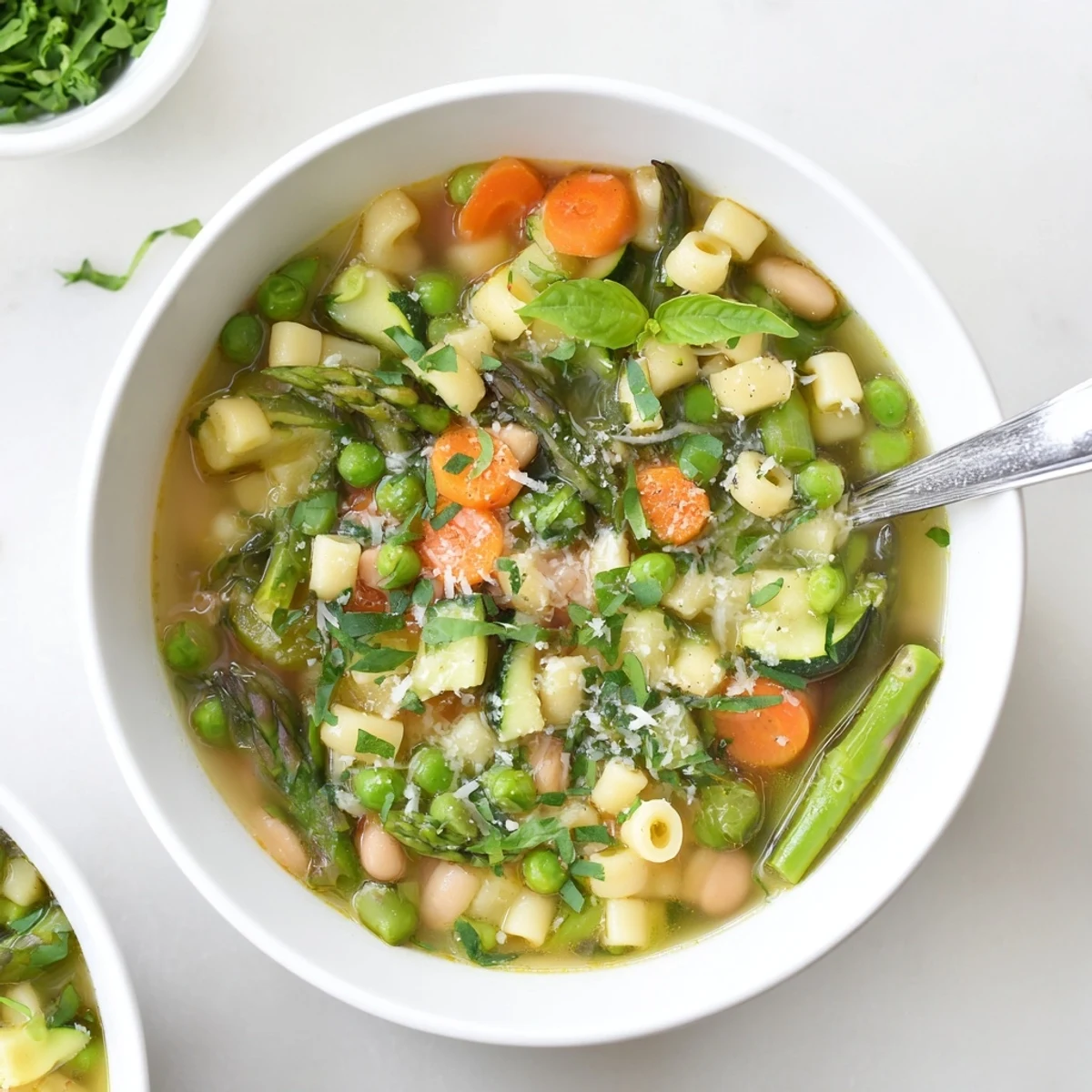
Save This soup became my go to for Sunday meal prep because it actually tastes better the next day when the broth has had time to pull everything together. Something about sitting in the fridge overnight turns good into great.
Picking Your Spring Vegetables
The beauty of this recipe is how forgiving it is with swaps. Fava beans, green beans, or sliced leeks all work beautifully in place of or alongside what is listed. I have thrown in radishes when I had too many and the slight peppery bite was fantastic.
Broth Matters More Than You Think
I used to grab whatever vegetable broth was on sale and wonder why my soups tasted generic. Switching to a high quality low sodium broth changed everything overnight. If you make your own, even better, but a good store bought one gets you ninety percent there.
Serving It Like an Italian
A hunk of crusty bread for dipping is not optional in my house, it is part of the meal. A cold glass of Pinot Grigio alongside turns a simple weeknight soup into something that feels like a small occasion.
- Toast thick slices of sourdough with olive oil and rub with a garlic clove for the best dipping
- Drizzle a tiny bit of good olive oil over each bowl right before eating
- Make extra because someone will absolutely ask for seconds
 Save
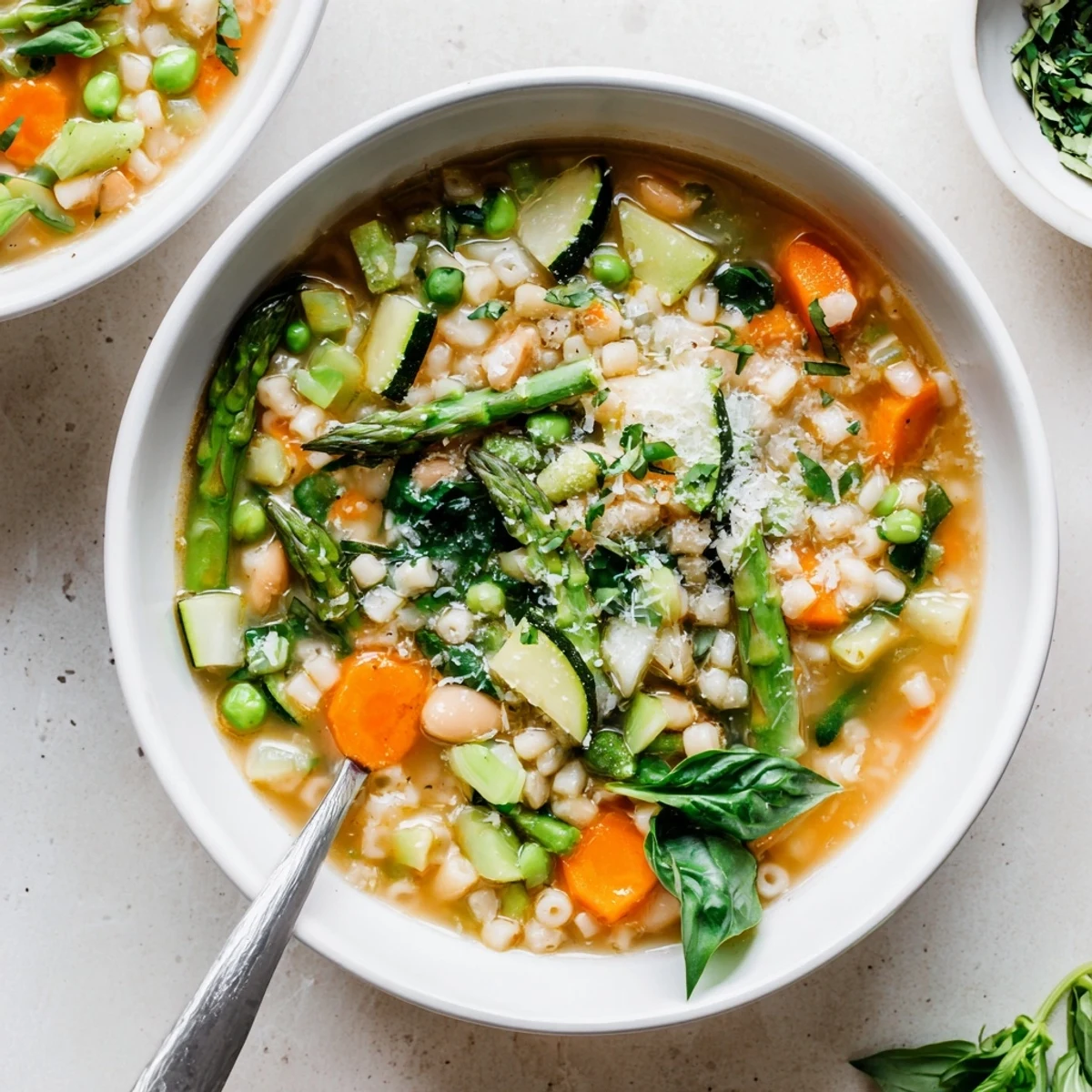
Save There is something deeply satisfying about turning a chaotic pile of spring vegetables into a pot of soup that makes the whole house smell alive. This one does exactly that.
Common Questions
- → Can I make spring minestrone ahead of time?
-
Yes. The soup develops even more flavor when refrigerated overnight. Store pasta separately if you prefer it not to soften further.
- → What pasta works best in minestrone?
-
Small shapes like ditalini, orzo, or elbow macaroni are traditional. They fit neatly on a spoon and cook quickly in the broth.
- → Is this minestrone suitable for vegans?
-
Simply skip the Parmigiano Reggiano garnish or replace it with a plant-based alternative. Everything else is naturally vegan.
- → Which spring vegetables can I substitute?
-
Fava beans, green beans, leeks, or even sliced sugar snap peas all work well in place of or alongside the suggested vegetables.
- → How should I store leftover minestrone?
-
Cool completely, then refrigerate in an airtight container for up to 3 days. Reheat gently on the stove, adding a splash of broth if needed.